
“At your service” Press release for the exhibition
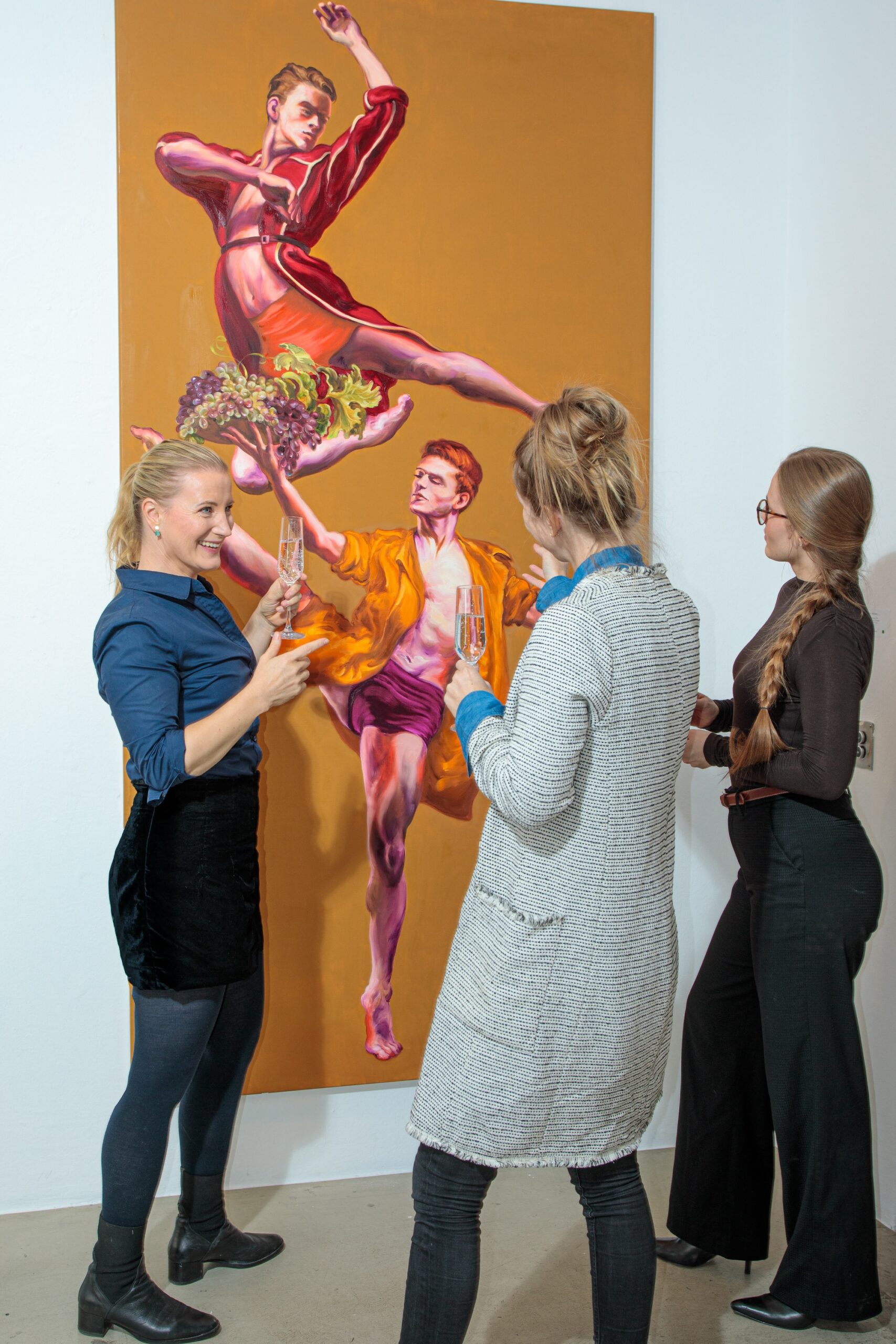
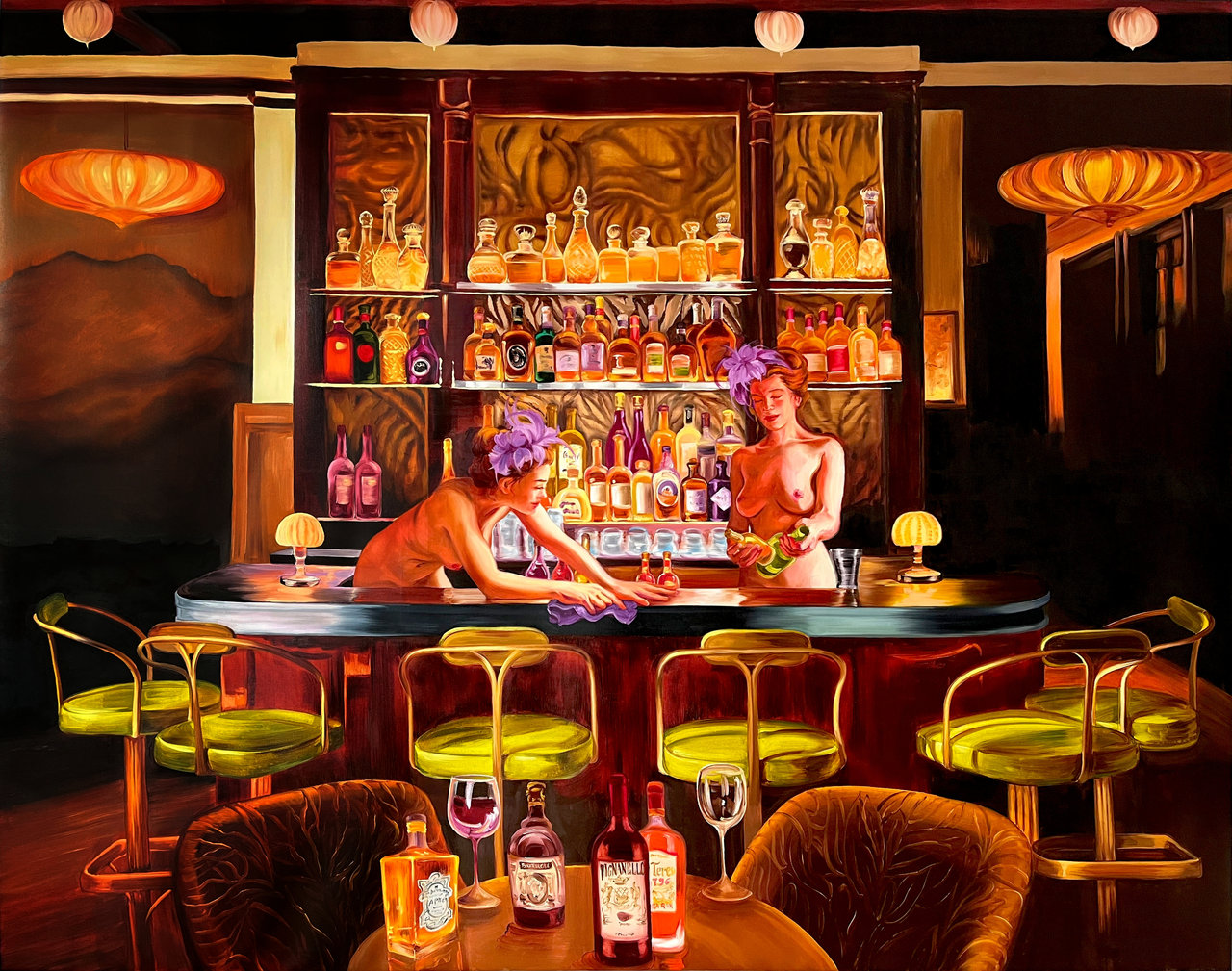
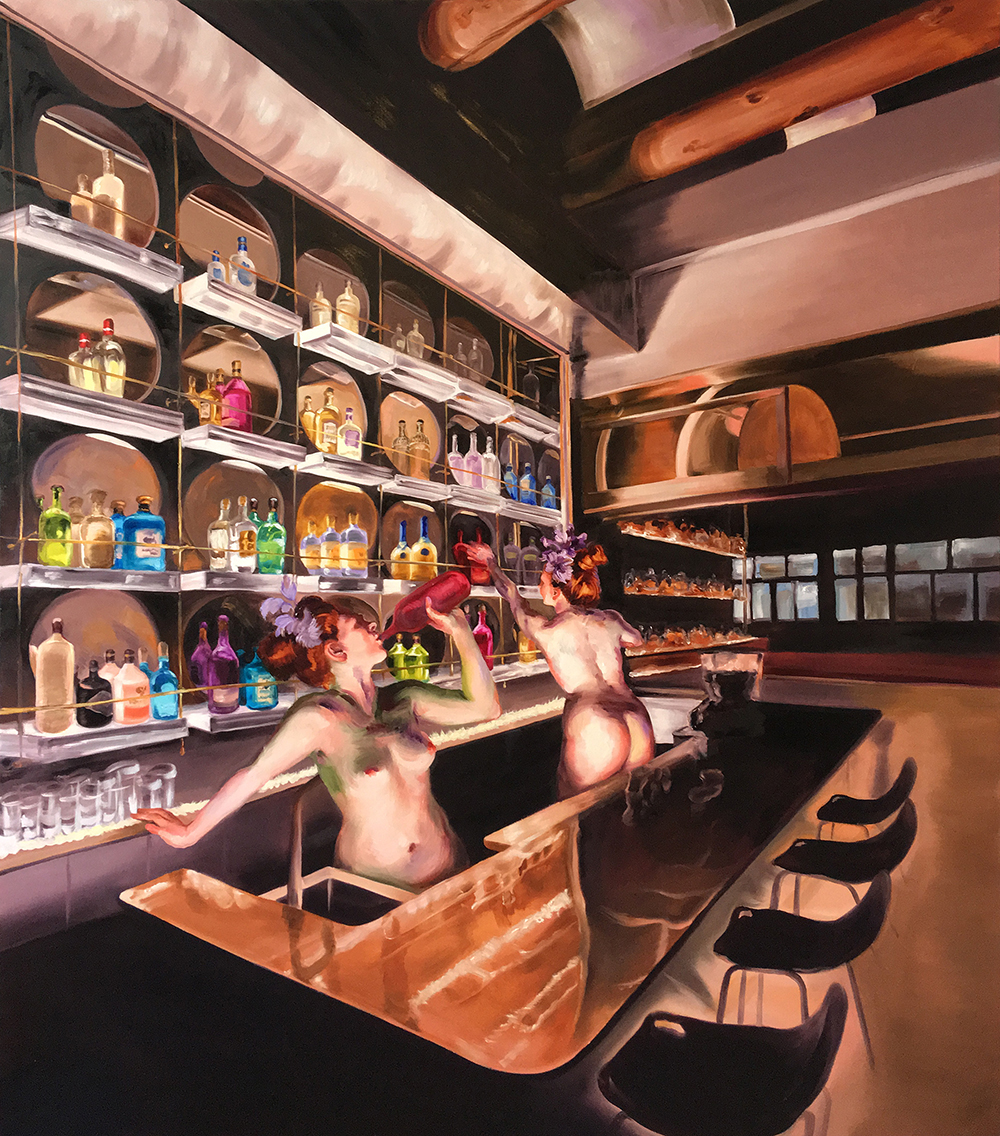
The exhibition primarily addresses hierarchy in the workplace and explores the question of who is dependent on whom. This role is constantly being exchanged or, as in the screen-print series "Fresh Meat," taken to extremes. The images also aim to shake things up and provoke. Everyone is invited to question themselves and others in their respective situations and positions. The nudity of the figures in the images "Bar" and "The Gardener's Treasure Has Fallen Down" is intended to highlight their inferiority and vulnerability as employees.
The picture "Gardener's Treasure Has Fallen" depicts a snapshot of a gardening accident: The attractive gardener has fallen from his ladder while working, and the lady of the house looks out the window and comments on the situation. The scene intentionally conveys a certain condescension towards the staff, as this is not uncommon in real life. In the pictures "At Your Service," the servants are lined up in a row.
In this exhibition, Sala Lieber, a master student from Hungary who studied in Düsseldorf, takes us back to the 17th century and reveals to us the splendor and magnificence of the Baroque and Rococo periods in all their facets.
She portrays the servants as an anonymous and impersonal mass whom we do not recognize as individuals with desires and concerns. Thus, the servant is an interchangeable being.
In the painting “Triptych,” the row of servants is quite brazenly depicted on a significantly larger canvas than the master of the house. Or in the painting “The Gardener Has Fallen Down,” the perhaps cynical view from the window is captured on the naked gardener. It is a game of power and hierarchies.
But certainly, without the work of servants, much property would be uncontrollable. This also raises the question: who cannot live without the others, who is indispensable?
With the exhibition “At Your Service,” the artist this time focuses not only on the magnificent architecture of castles and residences and portraits of noble personalities and families, but also on the lower rungs of the courtly hierarchy: the servants, who, as a symbol of aristocratic status, shaped and defined the image of the Baroque era. Thus, depictions of butlers in elegant men's suits and maids in black dresses trimmed with white ruffles have always been a feature of painting.